


- Diagnostics
-
by admin
Introduction
Sonography, commonly known as ultrasound, is a non-invasive imaging technique that uses high-frequency sound waves to create images of the internal organs. It’s widely used across medical fields due to its safety, accuracy, and ability to provide real-time results without any radiation exposure.
Whether you’re pregnant, dealing with abdominal pain, or undergoing routine diagnostics, sonography plays a crucial role in early detection and effective treatment. In this blog, Aavika Diagnostic explains everything you need to know about sonography—how it works, its applications, and what you can expect during your test.
What Is Sonography?
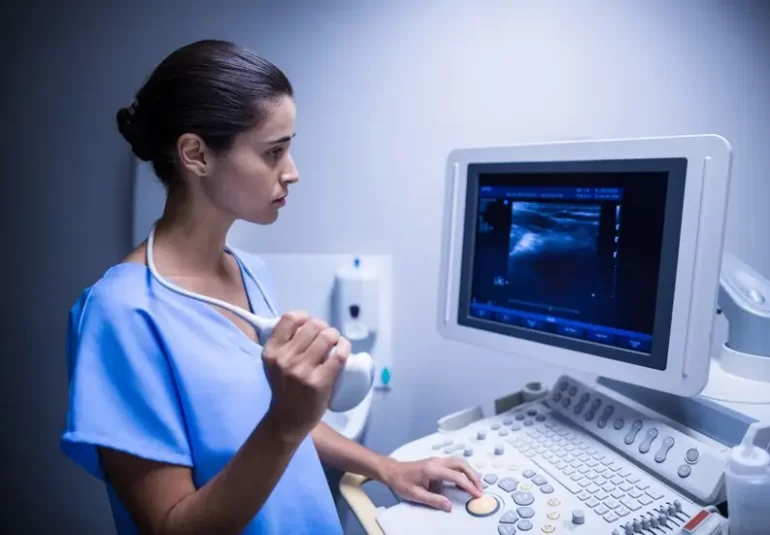
Sonography uses sound waves transmitted from a handheld device called a transducer. These waves bounce off internal tissues and organs, and the echoes are converted into visual images on a screen.
Unlike X-rays or CT scans, sonography does not use ionizing radiation, making it one of the safest diagnostic imaging methods available.
Common Uses of Sonography
At Aavika Diagnostic, we perform sonography for a wide range of conditions. Some of the most common include:
🔹 Abdominal Sonography
To examine organs like the liver, gallbladder, pancreas, kidneys, and spleen for signs of disease or infection.
🔹 Pelvic Sonography
Used to evaluate reproductive organs in women (uterus, ovaries) and detect conditions like cysts, fibroids, or menstrual irregularities.
🔹 Obstetric Ultrasound
To monitor fetal development during pregnancy. It’s safe for both the mother and baby, and often used throughout all three trimesters.
🔹 Thyroid, Breast, and Testicular Imaging
Sonography can detect nodules, lumps, or abnormalities in soft tissues.
🔹 Urinary Tract & Kidney Scans
Helpful in identifying stones, blockages, or infections in the urinary system.
🔹 Color Doppler Studies
To assess blood flow in veins and arteries, especially useful for detecting clots, varicose veins, or vascular abnormalities.
Is Sonography Safe?
Yes, sonography is completely safe. It does not emit radiation, making it suitable for pregnant women, children, and people who require frequent imaging. There are no known long-term side effects, and most procedures are painless.
How to Prepare for a Sonography Test
Preparation may vary depending on the type of sonography being performed:
-
Abdominal ultrasound: Fasting for 6–8 hours is usually recommended.
-
Pelvic or pregnancy scans: A full bladder is often required, so drinking water beforehand is necessary.
-
Thyroid or soft tissue scans: No special preparation needed.
Our team at Aavika Diagnostic will provide clear pre-test instructions when you schedule your appointment.
What to Expect During the Procedure
-
You’ll be asked to lie down comfortably on a bed.
-
A special gel will be applied to the area being examined to help transmit sound waves.
-
The technician will gently move the transducer over your skin.
-
You may feel slight pressure but no pain.
-
The entire process usually takes 15–30 minutes.
Why Choose Aavika Diagnostic for Sonography in Thane?
-
✅ Latest ultrasound machines for high-resolution imaging
-
✅ Experienced radiologists with diagnostic expertise
-
✅ Comfortable and hygienic environment
-
✅ Quick report turnaround
-
✅ Affordable rates and packages
Conclusion
Sonography is one of the most versatile and safest diagnostic tools in modern medicine. Whether you’re undergoing a preventive scan or investigating a health concern, early and accurate diagnosis can make all the difference.
At Aavika Diagnostic, Thane, we ensure every sonography test is conducted with care, precision, and professionalism.
📞 Book your sonography appointment today at 9967421702 or visit our center for same-day slots.